


Back
Sales forecast vs sales target: the difference and how to track it
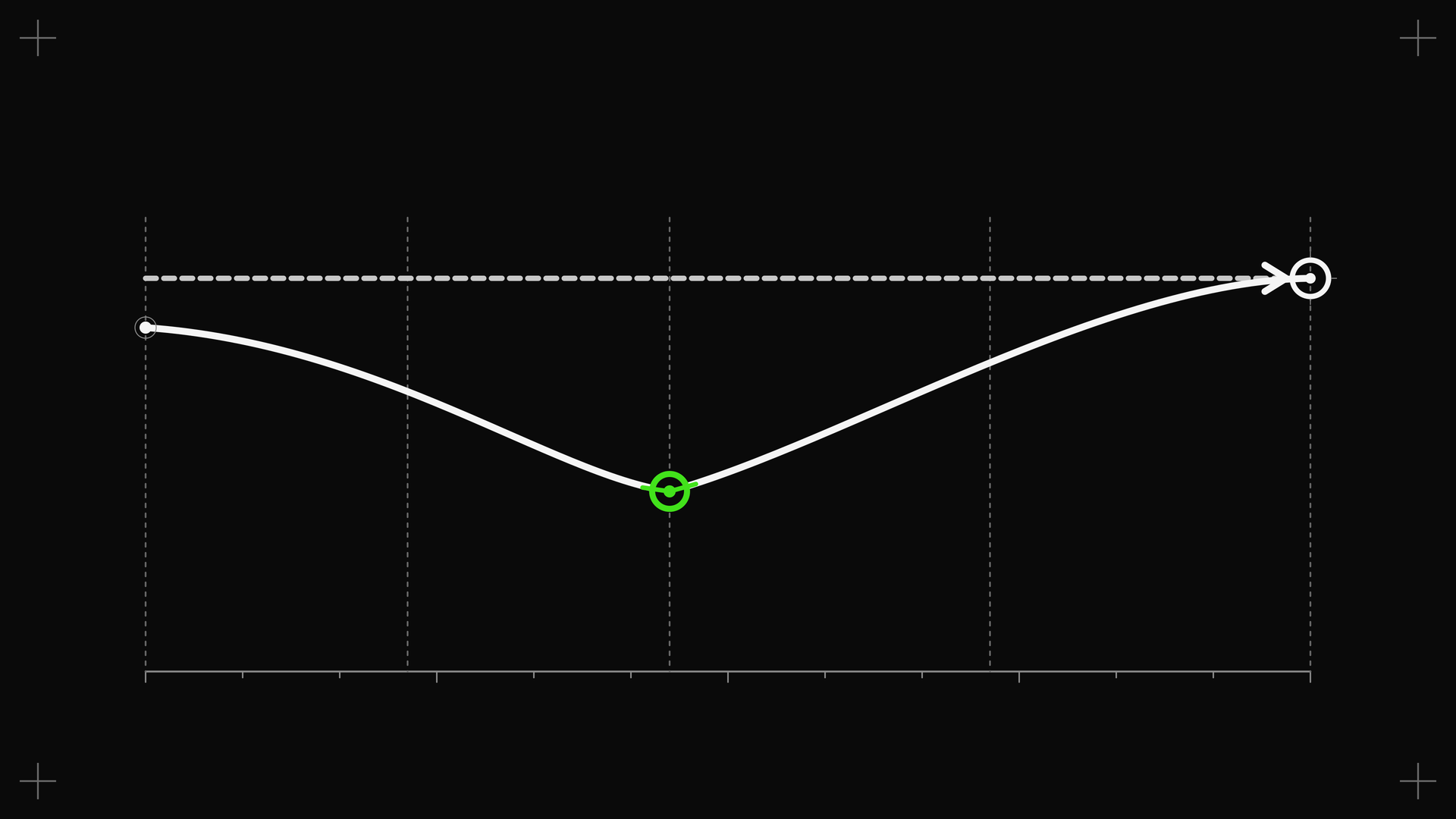
A sales target is where the company decided to land in a given period, and a sales forecast is where it will land if nothing changes in the operation before that period ends. The distance between those two numbers is what leadership actually manages, because that is where you see which action has to change while there is still time to move the result.
In companies that still plan only through meetings, slide decks and spreadsheets, the target usually comes out of annual planning and cascades down to the quarter and to each team, while the forecast gets put together the day before the results meeting from what each rep believes will close. When both numbers land on the same screen at the same time, the conversation tends to defend the target instead of reading the forecast, and the gap shows up close to the end date, when there is little room left to adjust.
This guide lays out how to track the plan as a sequence any sales leadership team can run with the tools it works with, from the CRM to the spreadsheet, and shows how a weekly review of the gap turns the forecast into a plan.
Why the target and the forecast need separate numbers
Bjarte Bogsnes, who led the change in Statoil's management model (the company is now Equinor), describes the separation in his 2012 article Taking reality seriously:
"A target is what we want to happen. A forecast is what we think will happen, whether we like what we see or not. [...] An ambitious sales target can't at the same time also be an unbiased sales forecast."
Bogsnes draws his example from running an energy company, but the point carries over to the sales function of any business: the target can be ambitious, since it drives hiring, investment and what leadership commits to the board, while the forecast has to be the most faithful picture possible of what open opportunities support. Once the forecast is held to account as a commitment, the team nudges the number toward the target, and leadership loses the instrument that would have shown the gap in time to fix it.
The plan is the third piece of the conversation, and the one that connects the other two. It describes what the operation will do differently so the forecast moves toward the target, with an action, an owning team and a deadline, which is why it changes every time the forecast review finds a new gap.
How to track the sales target and the sales forecast, step by step
- Lock the target with a named time horizon. Record the amount, the start and end dates of the period and the definition of what counts as a sale, whether that is a signed contract or a first invoice, so marketing, sales and CS are talking about the same number.
- Break the target down by the fronts that will deliver it. Split the amount by segment, channel or product, following the company's plan, and write down the assumption behind each part, such as expected conversion rate and average deal size, because that assumption is what the review will test.
- Define pipeline stages with entry criteria. Each stage needs a criterion the team applies when opportunities are handed from marketing to sales and between sales stages, so an opportunity in the proposal stage means the same thing in every rep's book.
- Build the forecast from open opportunities. Add up the value of opportunities with an expected close date inside the period, and keep the ones the team treats as committed apart from the ones that still depend on moving a stage, so the number stays free of pressure from the target.
- Calculate the gap on the same cutoff date. Compare target and forecast in amount and in percentage, always with the same cutoff date and the same data pull, and break the gap down by front to see where it concentrates.
- Write the plan for each part of the gap. For each front running below expectations, record the action that changes the forecast, the team that owns it and the date its effect should show up in the pipeline.
- Record what each action produced. At the next review, compare the expected effect with what happened and carry the lesson into the target's assumptions and into the next plan.
Target, forecast and plan side by side
Sales target | Sales forecast | Plan | |
|---|---|---|---|
Question it answers | Where the company decided to land in the period | Where the operation will land if nothing changes | What changes to move the forecast toward the target |
Who sets it | Leadership, during period planning | Sales leadership, from open opportunities | Leadership, with the teams that own each action |
What the number rests on | Ambition, team capacity and what the company needs to deliver | Stage, value and expected close date of each opportunity | Gap by front and assumptions that did not hold |
When it changes | Rarely, and only through a recorded decision | At every review, whenever the evidence changes | At every review where the gap changes |
How to read the signal | A target far from the forecast calls for a plan, and the target stays as the reference | A forecast that tracks the target every week with no movement deserves a second look | A plan with no effect on the forecast calls for a different action, in the same team or another one |
The table works as a shared standard for the meeting, because each number has an owner, a basis and a pace of change, and the results conversation gets better when nobody has to adjust the forecast to protect the target.
How the manager reviews the gap every week
A weekly review keeps the gap small enough to fix inside the period. In its 2017 article Always-On Strategy, BCG describes a company that tracks strategy execution against indicators throughout the year:
"The company also regularly reviews the progress of strategy implementation against KPIs, allowing it to spot deviations easily and take corrective actions rapidly."
BCG is writing about company-wide strategic planning, and the same principle fits the sales routine, because annual planning sets the target and frequent forecast reviews are what let you correct course before the end date. A weekly routine in four moves is usually enough.
Fix the cutoff date and the source of the number
The weekly forecast always comes from the same CRM pull with the same cutoff date, so the change from one review to the next reflects the operation and leaves out any change in method. When the pull changes, leadership notes the change before comparing numbers.
Read what changed since the last review
The starting point is the movement in the forecast, with the opportunities that advanced a stage and the ones whose expected close date slipped past the end of the period. That reading shows at which stage of the funnel the gap is growing and steers the conversation toward the action that can move the number.
Assign each part of the gap to an action
Each meaningful part of the gap gets an action with an owning team and an expected date of effect. The bottleneck is described by the stage or the action, such as proposal-to-won conversion in one segment, and the conversation stays on what the operation will change, which keeps the meeting focused and the team willing to bring the real number.
Record the decision for the next review
The week closes with a record of what was decided, which assumption changed and what effect is expected. At the next review, leadership starts from that record, compares expected with actual and decides whether the action continues or the target's assumption needs revisiting, with the decision documented.
How to set up the tracking in practice
You can track the distance between the sales target and the sales forecast with the set of tools your operation already uses. The circuit has four pieces: a shared base, a knowledge base that stays current, an AI that reads the facts with the company's context, and a project and task system that adjusts course while there are still weeks left in the period.
1. Extract and normalize the data into a shared base
Export from the CRM (HubSpot, Salesforce or Pipedrive) the open pipeline, the stage of each opportunity, the expected close date and the probability. Bring media spend (Google Ads, LinkedIn Ads) and the marketing funnel (HubSpot, RD Station or Marketo) into the same Google Sheets spreadsheet or into a lightweight BigQuery warehouse, using Fivetran, Airbyte or a scheduled export. The real work is in the mapping: stage A in the CRM has to mean the same thing as stage A in the forecast, and someone has to review that mapping every time sales changes the funnel.
2. Keep a knowledge base up to date
Write down in Notion or Confluence what counts as commit, which win rate per stage leadership accepts, what the weekly cutoff date is and who decides when a gap turns into an action. Without that living page, every review reopens the definition, and the spreadsheet number drifts away from leadership's criteria.
3. Strengthen the processing with AI and context
Paste the week's snapshot (pipeline, gap, call notes) into ChatGPT or Claude, or build a Clay workflow that enriches accounts and suggests hypotheses. The quality of the answer follows the quality of the context you pasted: if the export is stale, or the commit definition changed and nobody updated the prompt, the suggestion points to the wrong place.
4. Adjust course with projects and tasks
Open the week's project in ClickUp, Asana or Jira with the actions that close the gap (new sequences, a stage review, extra effort in one segment). Without an owner, a deadline and a link to the forecast number, the board moves and the gap stays where it was.
When the four pieces talk to each other, leadership sees the target, the forecast and the action in the same conversation. When one of them falls behind, the distance between the two numbers only shows up again at the next meeting.
Methodology: what keeps the system working after it is built
Building the shared base, the knowledge base, the AI with context and the course adjustments is stage 1. That build only stays useful if someone reviews the stage mapping, updates the commit definition, refreshes the context the AI reads and tightens the tasks again when the gap changes. Without that upkeep, the system you built yesterday describes the operation as it was the day before.
The circuit also has to work regardless of who is in the seat. The spreadsheet, the criteria page and the action board are the company's source of truth rather than one manager's personal method. When the reading depends on the person who "knows how things stand", the distance between the sales target and the sales forecast goes back to being a conversation instead of a shared number.
The next stage is to support that process with a validated methodology: a method tested in the market, with results observed in real operations, that tells you what to measure, what to decide and what to execute when a gap appears. A revenue operation is no place for experiments. The pace of the market leaves no room to work out the criteria in the same week the target has to close.
This is where standalone tools and method meet: the system you build with a CRM, a spreadsheet, Notion, AI and ClickUp gains stability when a growth methodology has already gone through the sense, decide and adjust cycle in other operations, and when the platform runs that cycle without rebuilding the machinery every period.
Where Strataflow fits in
Strataflow runs this same circuit in a single layer: operational data in a shared base, company knowledge kept current alongside execution, the GTM Brain suggesting where to act with the account's context, and course adjustment through GTM Strategies and GTM Actions, with Executions, playbooks and tasks. Underneath it runs Strataflow's proprietary Adaptive GTM Framework, the method that organizes sense, decide and adjust in the same cycle, so the operation starts out structured from the first pilot, without rebuilding the spreadsheet, the prompt and the board every week.
Frequently asked questions
What is the difference between a sales forecast and a sales target?
A sales target is the amount the company decided to reach in the period, set during planning. A sales forecast is the estimate of what the operation will close if nothing changes, calculated from open opportunities, the stage of each one and its expected close date. The difference between the two shapes the plan.
Should the sales forecast match the target?
The two numbers are usually different, and that is healthy. The target expresses ambition, and the forecast expresses the best estimate given the available evidence. When the forecast tracks the target week after week with no movement at all, it is worth checking whether the opportunities support the number or whether the forecast has started being treated as a commitment.
How often should you review the sales forecast?
A weekly review, with the same cutoff date and the same data source, usually balances freshness and effort for most B2B operations. The target follows the planning rhythm, quarterly or annual, while the forecast changes whenever the evidence from the opportunities changes.
Who builds the sales forecast?
Sales leadership builds the forecast from the opportunities recorded in the CRM, with input from each rep on stage, value and expected close date. Marketing and CS contribute what affects the period, such as newly generated opportunities and the renewals and expansions expected across the customer base.
What should you do when the forecast falls below the target?
Break the gap down by front and by funnel stage, give each part an action with an owning team and an expected date of effect, and follow the result at the next review. The target changes only through a recorded leadership decision, when the assumption behind it no longer holds.
Can the sales target change during the quarter?
It can, as long as the change is a leadership decision recorded with the assumption that changed, such as a shift in the market or in team capacity. Adjusting the target to fit the forecast hides the gap, which is why forecast reviews and target reviews happen at separate moments.
The future of GTM, available today.

GTM Diagnostic
Measure how much your GTM operation drives predictable growth.
A comprehensive, free diagnostic based on the Strataflow revenue scaling methodology.
Platform demo
See how to evolve your company's GTM Strategies.
Get to know Strataflow and see GTM Brain in action, from planning strategies to learning from every cycle.