


Back
When business and product read the same evidence
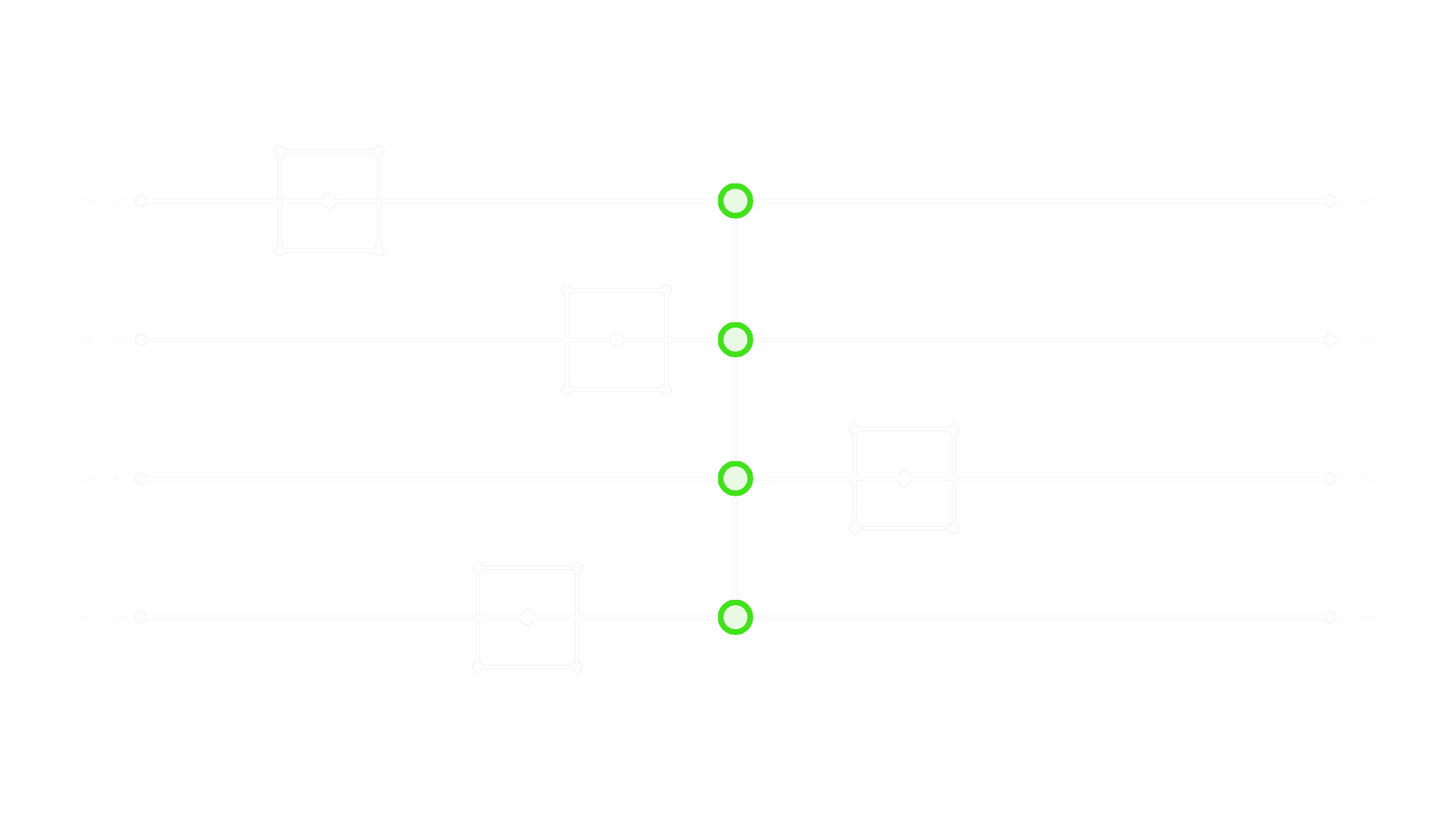
A GTM motion produces evidence at four different points of the cycle, and each point is observed by a different team, with a different instrument, at a different time.
That is not a communication problem between teams. It is a structural property of how the evidence forms: the data that answers whether a commercial hypothesis worked does not exist anywhere in one piece. It exists in four fragments, each held by whoever has the instrument to measure it, and none of the four is sufficient to conclude.
The practical consequence is that the question "did this motion work" has no local answer. Any team that answers alone is answering a smaller question, which is whether its own part worked.
What each team can observe
For each team, it is worth separating the instrument it holds, what falls outside its reach, and the conclusion it reaches when it decides alone.
Marketing
Instrument: Top-of-funnel conversion, cost per lead, engagement by asset and channel.
Outside its reach: What happens once the record enters the commercial queue. Account quality only reaches marketing as an aggregate acceptance rate, and with a delay.
Isolated conclusion: Volume within budget means the motion worked. True on the instrument and insufficient as a verdict.
Sales
Instrument: Acceptance rate, rejection reason, cycle length, average value.
Outside its reach: Whether the rejection comes from the record's source, the qualification criteria, the level of counterpart, or a gap in the offer. All four produce the same symptom in the queue.
Isolated conclusion: Low acceptance means a bad list. It is the most likely reading of that instrument, and the one least often correct in a new segment.
Customer Success
Instrument: Activation, time to first result, expansion, cancellation.
Outside its reach: Everything that happened before signature, including what the commercial conversation promised. And in a segment that did not convert, CS has no observation at all, because no account arrived.
Isolated conclusion: Absence of data reads as absence of a problem. A motion that produced no accounts never appears on the team's radar.
Product
Instrument: Requests arriving from the field, usage of existing features, gaps reported in support.
Outside its reach: The commercial context of each request. The demand arrives as an individual report, without the motion, the segment and the value it would unlock.
Isolated conclusion: A request without volume does not enter the roadmap. That is the correct policy for prioritization, and it discards demand with real volume, merely fragmented across three reports nobody grouped.
Locally valid conclusions and a globally wrong verdict
The four conclusions above are simultaneously correct on the instrument and wrong as a verdict. That is a specific class of failure, and it is harder to detect than bad data.
Bad data produces a visible contradiction. Two teams present different numbers for the same thing and somebody notices. A locally valid conclusion produces no contradiction at all, because the four teams are measuring different things and none contradicts the other. Each keeps operating on a coherent reading of its own fragment.
That explains why more dashboards do not fix it. A dashboard is built on one team's instrument and inherits its reach. Adding four dashboards produces four coherent readings side by side, and the assembly is still performed by one person, from memory, in the meeting.
Assembly requires the four fragments to be linked to the same hypothesis, rather than to the same account or the same period. Account and period are keys the CRM already provides. Hypothesis is the key that has to be created, because it is the only thing all four were testing at the same time without knowing it.
The two destinations of a verdict
A complete verdict points to one of two places, and most operations have a path to only one of them.
The first destination is the playbook. When the verdict says the approach, the channel, the acceptance criteria or the level of counterpart has to change, the correction fits the next execution of the same motion. That path exists in any operation that records learning, even poorly.
The second destination is the offer. When the verdict says a segment refuses because the product does not cover the use case, no execution change resolves it. That path rarely exists in a structured form, and the consequence is predictable: the same objection gets tested again every cycle with better copy, and the operation treats a product scope decision as a messaging problem.
Three attributes separate a report from actionable evidence for product, and execution holds all three while an individual report loses them: the motion and the segment where the demand appeared, how many accounts of the same profile asked for the same thing, and what the absence cost in acceptance or cancellation. An integration request from one rep is anecdote. The same request, tied to three tier A accounts that stalled at acceptance in the same segment, is prioritization with an estimable value.
The return path has to exist as well. When product ships what the evidence asked for, the motion that produced the evidence has to be reopened, and the hypothesis that closed with a negative verdict gains a recorded retest condition. Without that return, product investment happens without the commercial operation knowing that the objection blocking it no longer exists.
What a record has to contain
Assembling the four fragments depends on one record per hypothesis, with eight fields. Each field exists to solve a specific problem, and each degrades in a predictable way when maintained by hand.
Motion and segment: The real search key, because whoever opens a new motion searches by segment and by offer, never by period. It degrades on vocabulary: the writer records utilities and the searcher types energy providers, and the finding exists without being found.
Hypothesis and premise: What is being tested and what would have to be true for it to work. Without this field, a 2% conversion result is not interpretable, because nobody wrote down what was expected. It degrades when filled in after the result, turning into a rationalization of what happened.
ICP and offer version: Determines whether learning from one cycle is comparable to the next. It degrades silently, because the definition changes and old records keep pointing at the previous version with no warning. That mechanism is described in data normalization across teams.
Marketing reading: Conversion and cost, with the number. It degrades by arriving first, which makes it the reading that closes the hypothesis alone whenever the process allows.
Sales reading: Acceptance and rejection reason, with the number and the distribution of reasons. It degrades when rejection is not formally recorded, which happens whenever rejecting requires a justification and not rejecting costs nothing. The design of that queue sits in what a structured opportunity handoff looks like.
CS reading: Activation, expansion and cancellation, with the window they were measured in. It degrades on delay, because in enterprise sales this reading arrives nine to eighteen months later, almost always after the motion has changed owners.
Product reading: The demand, the named accounts that asked for it, and the estimated cost of its absence. It degrades on fragmentation, because each request arrives through a different channel and nobody groups them.
Retest condition: What would have to be different to try again. This is the field that turns a recorded failure into usable inheritance, because a segment that does not work with an entry offer may work with a paid pilot. It degrades when written as "did not work", which is a conclusion with no condition.
Two rules complete the record. A hypothesis cannot be closed by whoever proposed it, because the proposer holds the instrument that generated the proposal and its matching blind spot. And searching the record has to be mandatory when opening any new motion, because a well-organized record nobody opens shares the fate of the retrospective.
What the assembly requires of a system
A manual record works while the number of open hypotheses fits in the memory of whoever maintains it, and it fails for a reason no process resolves through persuasion: the cost of recording falls on whoever is closing a motion, and the benefit goes to whoever opens another one months later, almost always a different person.
Four capabilities separate a file from a system that takes part in execution.
The hypothesis opens alongside the motion, without depending on someone remembering to record it. The verdict completes when the last reading arrives, even months later and under a different owner. The search recognizes similarity of segment and offer without depending on the writer's vocabulary. And the learning stays tied to the version of the definition it holds under, so it does not get applied to a base that has already changed.
At Strataflow those capabilities sit across connected layers. The Organization layer holds the normalized entity and the commercial catalog Initiatives inherit. The Operations layer executes with playbooks and actions carrying the origin of the decision. Inside the Cycle, Product Feedback receives the demand already tied to the account, the segment and the motion that produced it. The Knowledge layer keeps metrics, funnel logic, taxonomy and what each Cycle taught, available to the next execution of the same motion.
Frequently asked questions
Why can one team not evaluate a GTM motion on its own?
Because each team observes a different point of the cycle with a different instrument. Marketing sees conversion and cost, sales sees acceptance and rejection reasons, CS sees activation and cancellation, and product sees demand the offer does not cover. Each reading is valid on its own instrument and insufficient as a verdict.
What is the difference between a locally valid conclusion and bad data?
Bad data produces a visible contradiction between teams and somebody notices. A locally valid conclusion produces no contradiction, because the teams are measuring different things. Each keeps operating on a coherent reading of its own fragment, and the error only surfaces in the aggregate result.
How do you structure product feedback out of commercial execution?
By tying each demand to the motion and segment where it appeared, to the number of same-profile accounts that asked for the same thing, and to the cost of its absence in acceptance or cancellation. An isolated request is anecdote, and the same request tied to accounts that stalled at acceptance is prioritization with an estimable value.
Why is the record keyed on the hypothesis rather than the account or the period?
Because account and period are keys the CRM already provides, and neither links the four fragments of evidence to each other. The hypothesis is the only thing all four teams were testing at the same time, and it is what brings the fragments together.
Who should close a GTM hypothesis?
No team alone, and specifically not whoever proposed it, because the proposer carries the instrument that generated the proposal and its matching blind spot. The verdict requires all four readings, each with its own number attached.